
*From the Your Site Builders Podcast — Season 4, Episode 1*
Most website owners spend their energy chasing tactics: which plugin to use, which social media platform to post on, whether to run a discount this week or next. But underneath every question about tactics is a deeper anxiety — *am I doing enough, and is what I’m doing actually working?*
In the Season 4 premiere of the Your Site Builders Podcast, we addressed the questions that come up most often: how to drive more orders, which payment options to offer, and what to do when you discover a competitor who looks suspiciously like you. The answers share a common thread that’s easy to overlook — your most powerful differentiator isn’t a feature or a strategy. It’s you.
—
Stop Waiting for Traffic. Start Creating Engagement.
When visitors reach your website but don’t convert, the instinct is to push more traffic at the problem. More posts, more ads, more promotions. But volume without engagement is noise.
A more sustainable approach is to turn each visit into a discovery experience. Cross-sell intentionally — not with a generic “you might also like” widget, but by curating moments. Think about how a fashion retailer might build an entire outfit from their own catalog: a hat, a jacket, a pair of shoes. Suddenly, a visitor who came for one item is now imagining a whole look. The same logic applies to any product category. What does the complete version of what your customer wants actually look like? Show them that.
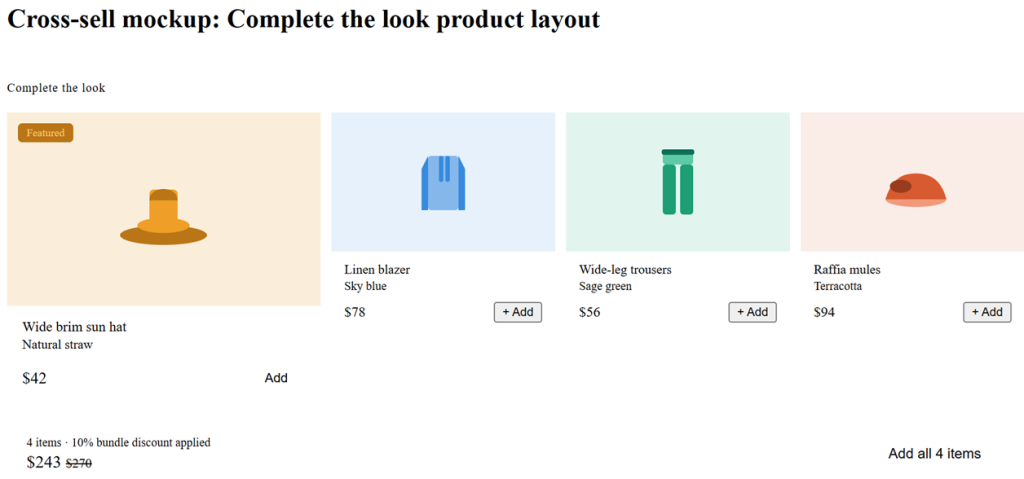
> “Instead of seeing one thing they want to buy, maybe the gears got turning and they see ten things they want to buy.”
Fear of missing out is a genuine motivator, and you don’t need a massive ad budget to use it. A time-limited coupon code shared exclusively with your social media followers — “this week only, spend $25 and save 10%” — creates urgency, rewards loyalty, and generates word-of-mouth at almost no cost.
Analytics can guide this, too. Look at which pages are actually getting traffic. If visitors keep landing on certain product pages, that’s a signal. Try promoting at the category level rather than the specific product level. Give people room to browse and discover, rather than funneling them to a single item. The goal is to let them get comfortable with you — and then let them surprise themselves with how much they find.
—
PayPal Isn’t the Only Option (Not Even Close)
One of the most common questions from site builders is whether customers are stuck using PayPal. The short answer: no. The longer answer is that there are dozens of merchant and checkout options available, and the right one depends on your specific situation.
Square, Authorize.net, Apple Pay, Google Pay — the ecosystem is wide. Some require specific account types (a business LLC, for example, or an existing account with that payment processor), and some integrate more cleanly with certain website platforms than others. It’s worth researching “merchant accounts for WordPress” or your specific platform to see what fits.
> “There are dozens of different checkout options. It’s not just PayPal — you just have to go see if they work for you and your situation.”
The practical takeaway: don’t let checkout friction cost you sales. If a customer wants to pay a different way, there’s almost certainly a path to supporting it. Audit your checkout options the same way you’d audit anything else about your site — periodically, and with fresh eyes.
—
Your Competitor Isn’t the Problem, but your Perspective Is the Solution.
Of all the concerns that come up in site-building conversations, this one is the most emotionally charged: someone discovers another website that looks almost identical to theirs. Same niche, similar products, maybe even similar themes. *What can I do?*
The honest answer is: not much, and that’s fine.
You are not in a race to be the only person in your space. You are in a pursuit of the people for whom your specific voice, your specific take, and your specific way of explaining things clicks in a way no one else’s does. Google itself prioritizes original research, reporting, and analysis — your opinions carry SEO weight precisely because they’re yours.
Consider this: take two website owners with identical product catalogs and ask them each to describe their favorite item. Chances are high they pick different products. Ask them to describe the same product and they’ll use different words, highlight different features, and connect it to entirely different life experiences. That divergence is not a weakness in your positioning. It’s the whole point.
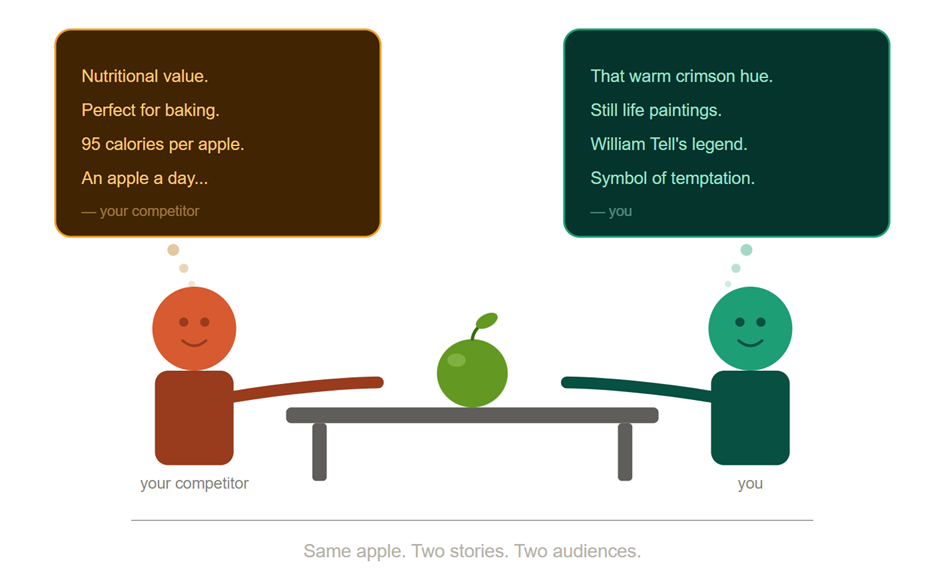
“You and I are both staring at the same apple, same room, right across the table. You may talk about the nutritional value. Me? I talk about the color, its place in art, the story of William Tell. We have two very different ways of talking about a simple topic — now adapt that to a product.”
When you find a competitor who seems to be doing what you do, the move isn’t to copy their differentiation or panic about losing customers to them. It’s to double down on the things only you can say. Carve out your corner of the market. Your perspective attracts your people. Their perspective attracts theirs. There’s enough room.
—
Key Takeaways
– **Cross-sell through curation.** Assemble complete “looks” or use cases from your catalog to increase average order value and give shoppers a reason to explore beyond their first click.
– **Use scarcity intentionally.** Time-limited, exclusive offers for your social following drive action without requiring heavy ad spend.
– **Let analytics direct your content.** Post at the category level, not just the product level, so visitors can discover their way to a purchase rather than being funneled to one item.
– **Expand your checkout options.** PayPal is a starting point, not a ceiling. Research what payment processors fit your platform, your business structure, and your customers’ preferences.
– **Your authentic voice is a competitive moat.** No competitor can replicate the way you think, explain, or connect. Google rewards original perspective. Your audience does too.
—