
Your Site Builders Podcast · Season 4, Episode 8
AI is everywhere — and small business website owners are caught in a real bind. On one hand, AI tools can save time, spark ideas, and keep content flowing. On the other hand, platforms are actively filtering out AI-generated content, and Google keeps doubling down on “people-first” results. So which is it: use AI, or avoid it?
The answer is: it depends on how you use it.
The “AI Slop” Problem Is Real
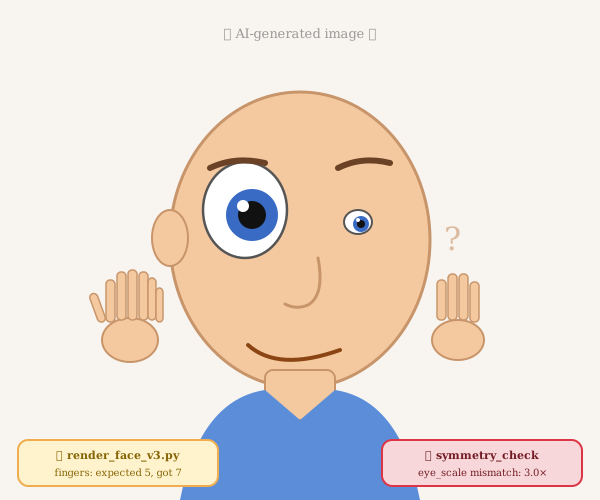
Since generative AI became publicly available, the internet has been flooded with “AI slop” — thoughtless, cookie-cutter content cranked out purely to hit a content quota. Blog posts with no original perspective. AI images with seven-fingered hands and sideways eyebrows. Search results stuffed with articles no human actually wrote.
Platforms are fighting back. Pinterest now lets users filter out AI-generated posts, a move met with overwhelming support. Google’s helpful content system continues to reward original, experience-driven writing and demote generic output. People are tuning it out — and algorithms are catching up.
What AI Actually Is (and Isn’t)
Generative AI isn’t actually thinking. It’s better described as an advanced search: it takes your query, finds relevant pieces from existing sources, and reassembles them into an answer. It can’t have your opinions. It can’t share your experiences. It has no original perspective.
That matters because Google wants content that is original in thought and value. A blog post written entirely by AI is, almost by definition, made of the same ideas your competitors have already published — because the AI learned from those same sources. There’s no differentiation, and no real value to readers.
The Right Way to Use AI
None of this means you should avoid AI. It means you should use it as a tool, not a ghostwriter. Here are the use cases where it genuinely helps:
- Idea generation: Stuck on what to write? Ask AI to brainstorm topics or angles. You choose what resonates and bring your own take.
- Editing and revision: You wrote a draft but it doesn’t flow? AI can act like a professional editor — cleaning it up while keeping your voice and ideas.
- Image starting points: AI-generated imagery can give you a concept to build from, but always review it carefully. The “seven fingers” problem is very real, and AI images are immediately recognizable to most people.
Work with AI — don’t let it work for you. Stay in the driver’s seat.

How to Get Found in AI-Powered Search
AI-powered search results (Google AI Overviews, ChatGPT, Perplexity) pull from sources they consider authoritative. Getting quoted in those results requires the same fundamentals as classic SEO — with a few key focuses.
Define your 5–10 core topics
Choose the specific topics you want to be known for and go deep on them consistently. Search engines use your sustained focus to identify what you’re an authority on. Scattered, catch-all content dilutes that signal.
Build real credibility signals
Google’s helpful content guidelines reward Experience, Expertise, Authority, and Trustworthiness (E-E-A-T). For small business owners, this can look like:
- Mentioning your relevant background (“As a dog groomer of 20 years…”)
- Sharing photos or videos you actually created — a cake you baked, a product you use, a space you designed
- Giving your honest opinion rather than neutral product descriptions
What if you’re new to your niche?
Not everyone has decades of expertise to cite. If you’re newer to your space, lean on reference posts: curate quality content you’ve found helpful, add your own commentary on why it matters to your audience, and build credibility over time. The key is always adding your own value — not copying and pasting someone else’s work.
The Bottom Line
Winning in today’s search landscape — AI-powered or otherwise — comes down to one thing: demonstrating genuine value to real people. That means:
- Content that reflects your actual thoughts, experiences, and expertise
- AI used as a support tool, not a replacement for original thinking
- A focused strategy built around 5–10 core topics
- Credibility signals that show search engines — and humans — why they should trust you
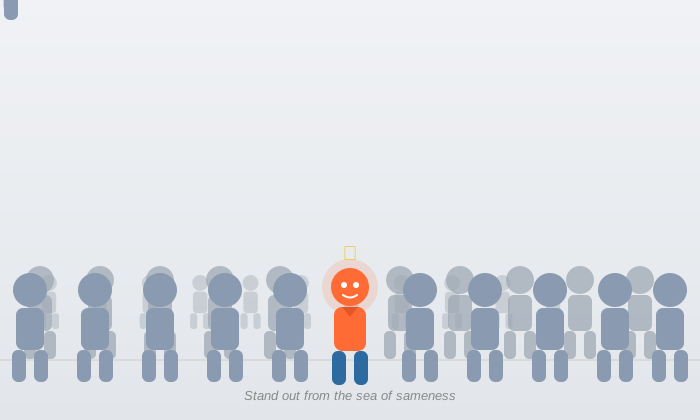
AI isn’t going anywhere. But the sites that will thrive are the ones using it as a lever, not a crutch. Show up as yourself, and you’ll stand out from the sea of sameness.
Adapted from the Your Site Builders Podcast, S4E8.